
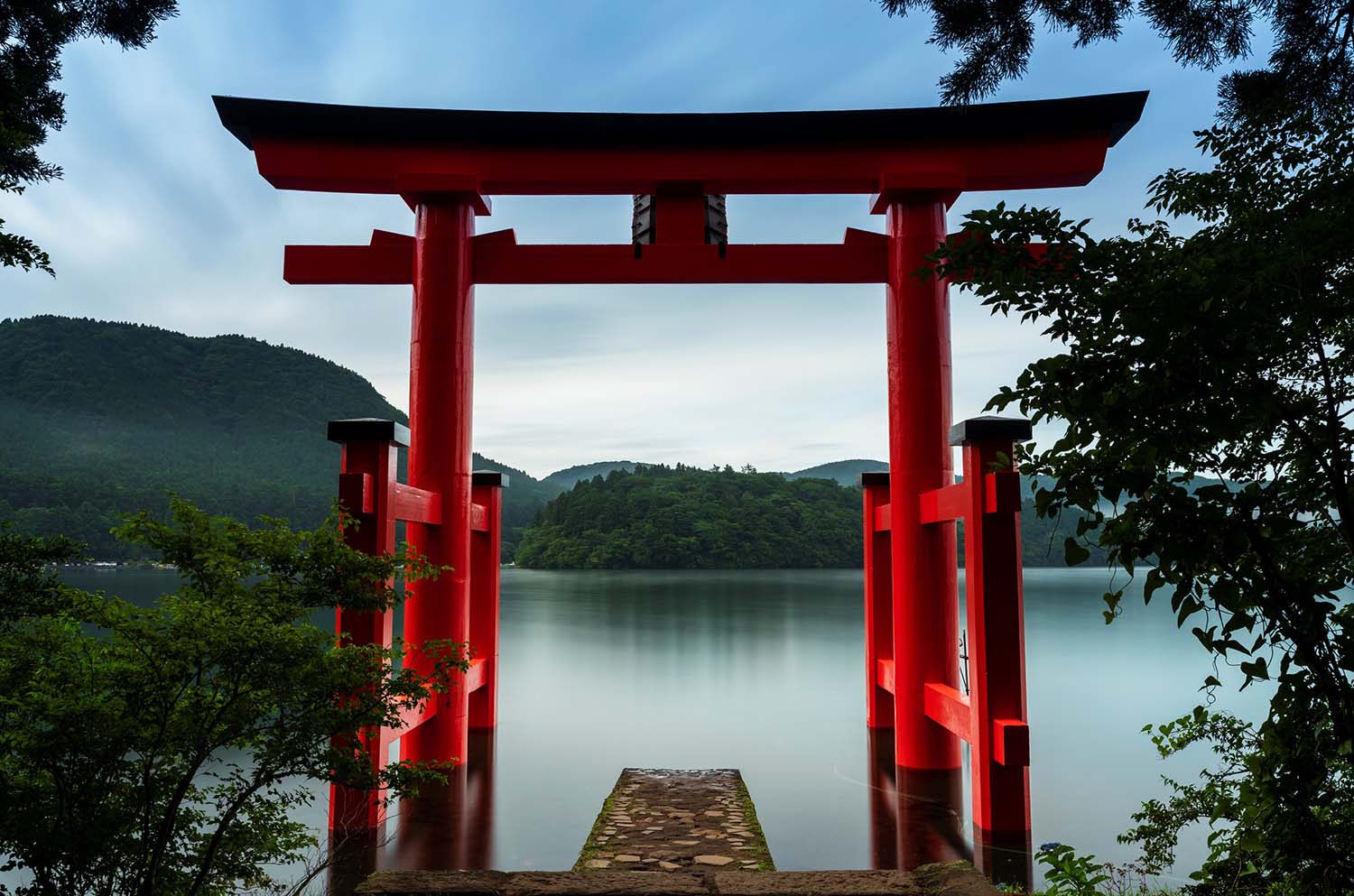
One of the classic images of Japan is the red shrine gates seemingly floating on the water with Mt. Fuji in the background. This is the Hakone Shrine, just south of Tokyo—a place of history, culture, and tradition.
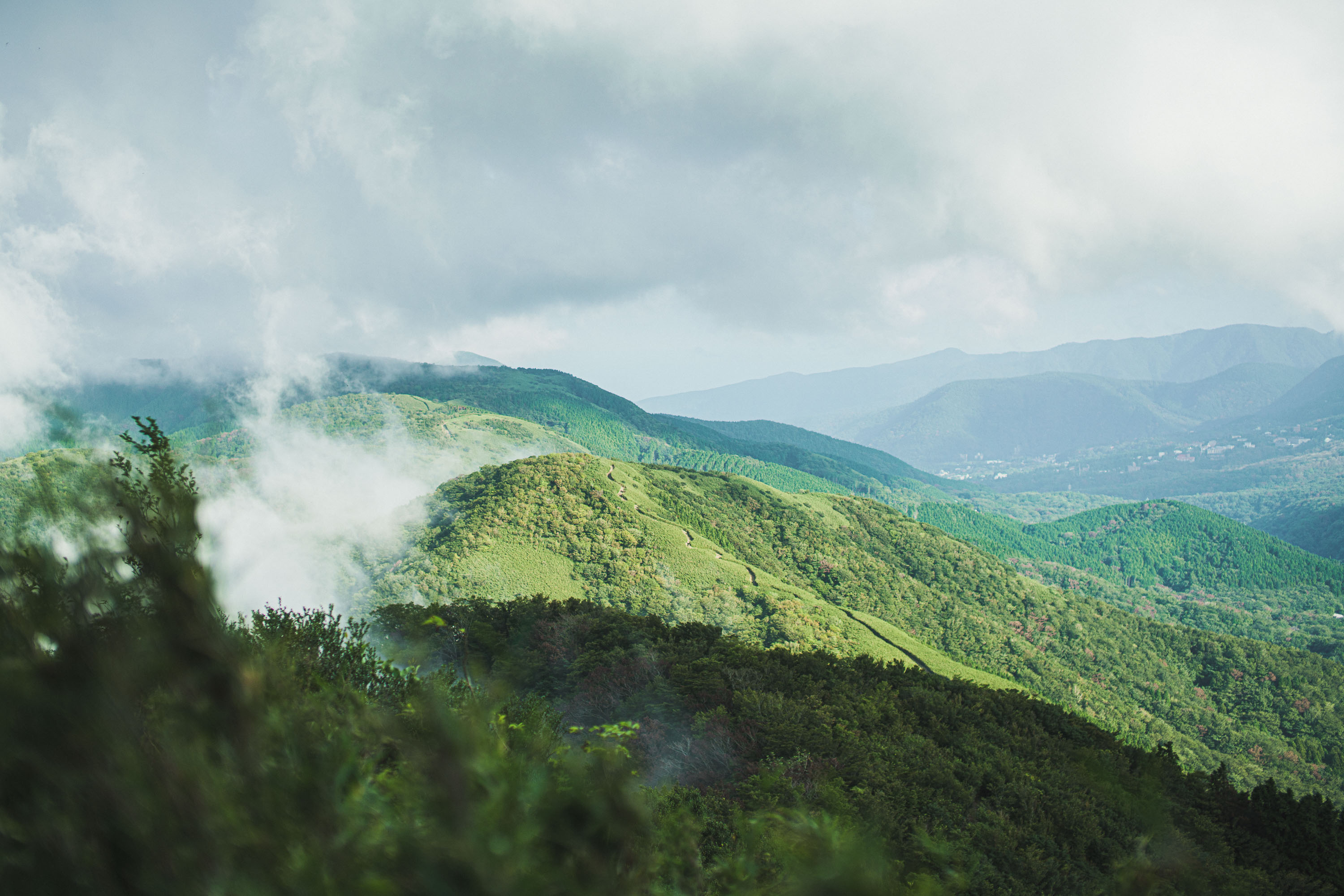
This shrine has played an important part in the history of Japan, in the lives of travelers, and has received patronage from samurai warriors for more than a century. The founding of the Hakone Shrine dates back to over 1200 years ago. The high peaks of Hakone have been worshipped for thousands of years. People believed that the souls of the dead would go there when traveling to the next world. A number of shrines were established on the surrounding peaks, and as time passed they were combined here at Hakone Shrine.
A priest called Mangan, named for his reading of 1,000 Buddhist sutras, came upon the lake during his travels. At the time the people on the shores of the lake were threatened by a nine-headed dragon, and the villagers were forced to sacrifice children to appease the dragon. Mangan chained the dragon to rocks beneath the lake and pacified it. The dragon is still celebrated with firework-shows during the Japanese holiday of Setsubun in February.
Years later, Hakone Shrine once again played an essential role in the history of Japan. Minamoto Yoritomo, an ousted heir to the position of the emperor, was exiled in the nearby Izu peninsula after his family was executed during a power struggle in Kyoto. The young boy grew up to lead a revolt to reclaim his position, but during the start of his rise, he lost one of his first battles in the nearby mountains of Ishibashiyama. He sought and was granted refuge on the grounds of the shrine. After years of battle, he established the Kamakura Shogunate and the shrine became a place visited by samurai and shogun alike.
Hakone Shrine is placed at the top of the Hakone mountains and on the heavily traveled road between Tokyo/Edo and Kyoto. This led it to become an important and symbolic stopping point for travelers over the centuries.
Reaching the shrine on the shores of Lake Ashi is fairly easy from Odawara, a station on the Shinkansen line or JR line, then a bus ride up the mountains. We hope that your visit adds another page to the colorful and important role this place has played in history.